
2026-03-10
The 90-Second Rule: Why Real Pizza Doesn't Need 20 Minutes in the Oven
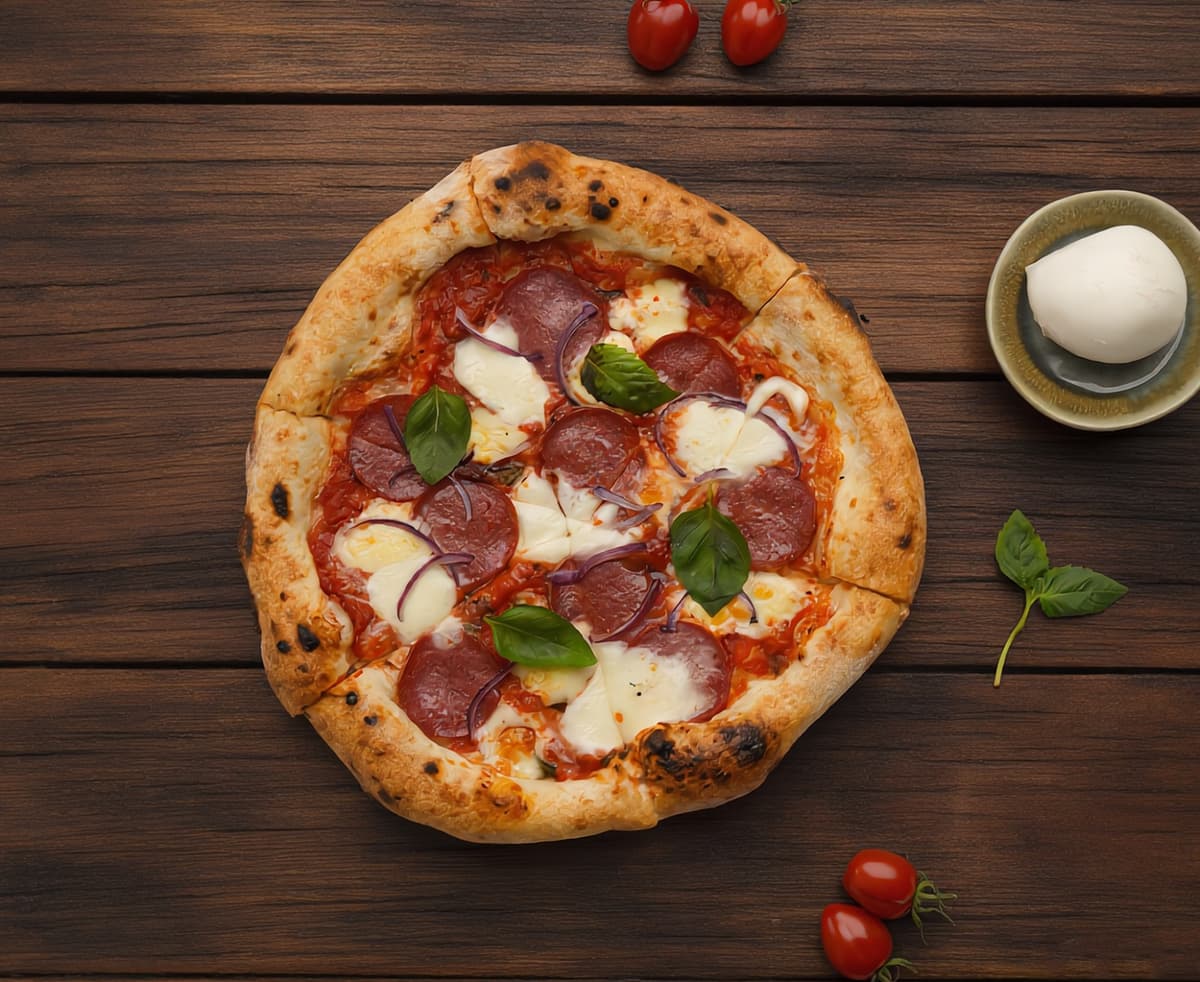
A typical pizza spends 15 to 20 minutes in the oven. A real Neapolitan pizza is done in about 90 seconds.
That's not a small difference in efficiency. It's the difference between two completely different results. Nearly everything that makes authentic Neapolitan pizza taste the way it does comes down to one thing: extreme heat, for a very short time.
Most people never think about the oven. They think about toppings, or cheese, or crust thickness. But the oven is where pizza is actually made or ruined — and the 90-second rule is the secret hiding in plain sight on every Neapolitan menu.
450°C is a different universe
A home oven tops out around 250°C. Most commercial pizza ovens run somewhere between 250°C and 300°C. A proper Neapolitan stone oven runs at around 450°C — almost twice as hot.
At that temperature, the physics of baking change entirely. The dough doesn't slowly dry out over twenty minutes. Instead, it gets hit with a wall of heat so intense that it cooks through in a minute and a half, before it has any chance to lose its moisture.
This is the whole game. Speed isn't a shortcut here — it's the only way to get the texture right.
What 90 seconds does that 20 minutes can't
When a stretched dough hits a 450°C oven, three things happen almost instantly.
The crust springs up. The sudden, violent heat causes the gases trapped in the dough to expand all at once — what bakers call "oven spring." The edge of the pizza puffs up dramatically into the cornicione, that tall, airy, pillowy border that's the signature of real Neapolitan pizza.
The outside chars while the inside stays soft. The surface blisters into dark "leopard spots" — small charred bubbles that add a smoky, slightly bitter complexity. But because it's all over in 90 seconds, the inside never dries out. You get a crust that's crisp and blistered outside, tender and moist inside. That contrast is impossible to fake.
The moisture gets locked in. The intense heat sets the outside of the dough almost immediately, sealing the water inside before it can evaporate. The result is a light, soft, pliable pizza — not a dry, stiff one.
A 20-minute bake at a lower temperature does the opposite of all three. The dough rises slowly and modestly. The water steadily evaporates, leaving the crust drier and tougher. There are no leopard spots, because the heat was never high enough to char without burning. You end up with something sturdier and crunchier — fine in its own way, but a fundamentally different food.
Why slow ovens make tougher pizza
Think about what twenty minutes of moderate heat actually does to dough. It's essentially a slow drying process. Minute by minute, water escapes, and the crust hardens into something closer to a thick cracker or a dense bread base.
That's exactly why those pizzas need to be so sturdy — they have to survive the bake and then hold a heavy load of toppings. The strength is a consequence of the slow oven, not a virtue in itself.
Neapolitan pizza doesn't need that strength, because it isn't built to be a sturdy platform. It's built to be eaten soft, fresh, and immediately — often folded in half straight out of the oven. The 90-second bake is what makes that softness possible.
The cheese tells the story too
High heat and short bake times don't just transform the dough — they protect the toppings.
Fresh Fior di Latte mozzarella is delicate and full of moisture. In a slow oven, it would overcook, turn oily, and weep water all over the base. In a 450°C oven for 90 seconds, it barely has time to do anything but melt into soft, milky white pools. The basil stays green and fragrant instead of burning. The tomato keeps its bright, fresh acidity instead of cooking down into paste.
Speed isn't just about the crust. It's what keeps every ingredient tasting like itself.
This is why real pizza can't wait
There's a catch to the 90-second rule, and it's an important one: a pizza this soft and fresh is meant to be eaten now.
A Neapolitan pizza is at its absolute peak in the first few minutes out of the oven — crust springy, cheese molten, everything hot and alive. It was never designed to sit in a box for an hour or get reheated the next morning. That's a feature, not a flaw. It's the price of making something fresh instead of something built to survive.
It's also why fast, hot delivery matters so much. The whole point is to get that 90-second pizza to you while it still tastes like it just left the fire.
Ninety seconds, done right
This is exactly how Celentano works. Hand-kneaded, slow-fermented dough goes into a 450°C stone oven and comes out in 90 seconds — blistered at the edges, soft in the middle, topped with real Fior di Latte mozzarella, and sent straight to your door in Baku while it's still hot.
We don't bake for twenty minutes because real pizza doesn't need twenty minutes. It needs ninety seconds and an oven hot enough to do the job properly. Everything else is just the difference between pizza that was made right and pizza that was made to wait.
Find out what 90 seconds at 450°C tastes like. Order a real Neapolitan pizza — delivered hot, across Baku.