
2026-03-15
One Dough, Three Days: Why Real Neapolitan Pizza Takes 72 Hours to Make
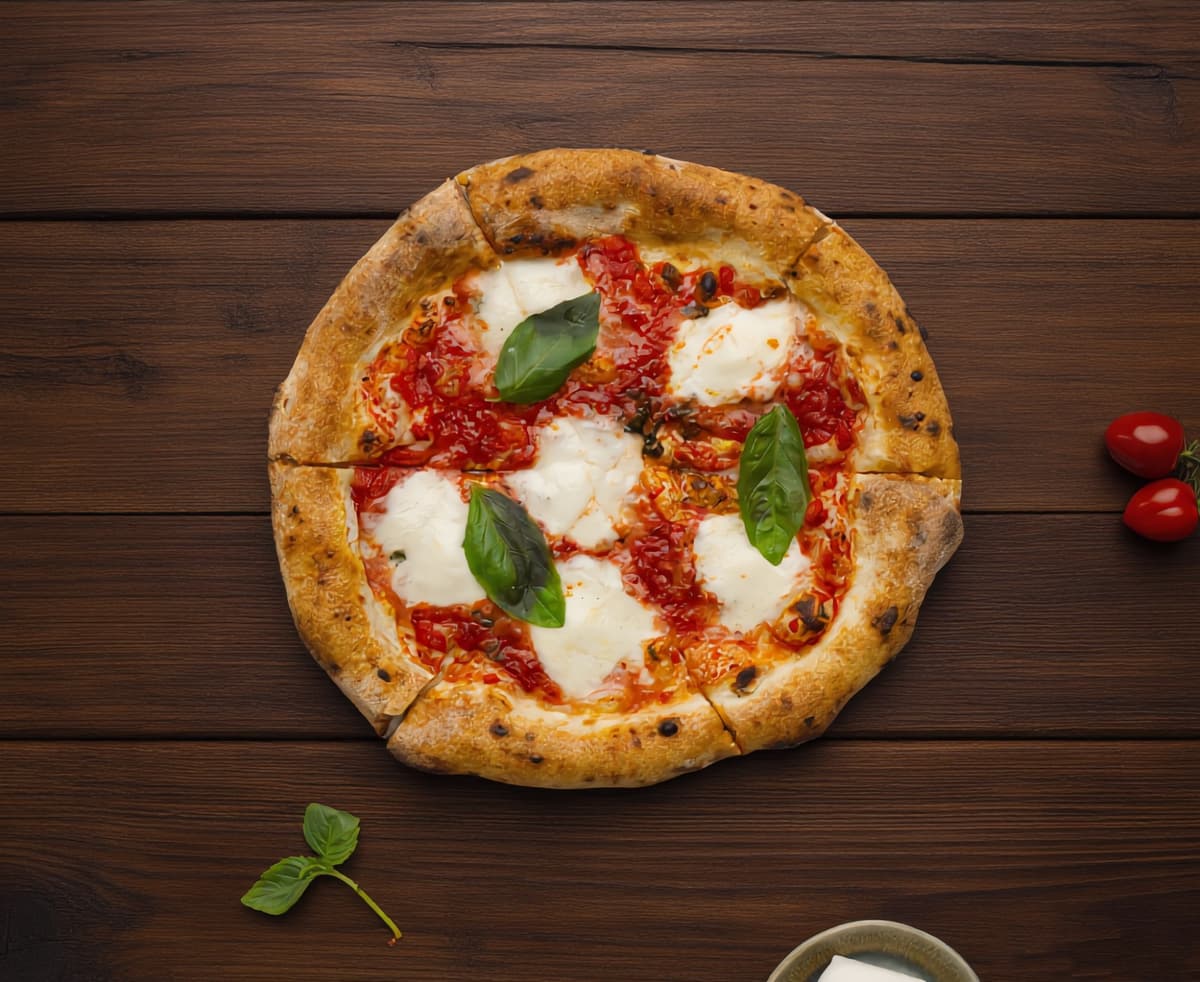
Most pizza you've eaten was made the same day you ate it. The dough was mixed, left to rise for an hour or two, shaped, topped, and baked. Fast, efficient, and forgettable.
Real Neapolitan dough doesn't work that way. The dough in a proper Neapolitan pizza was often made two or three days before it ever reached the oven. While you were going about your week, it was sitting quietly in cold storage, slowly transforming.
That waiting isn't laziness or inconvenience. It's the single most important step in making pizza taste the way it's supposed to. Here's what actually happens during those 72 hours — and why you can taste the difference in the first bite.
Four ingredients, and the most important one is time
Authentic Neapolitan dough is almost stubbornly simple: flour, water, salt, and a small amount of yeast. No sugar, no oil, no additives to speed things up or paper over mistakes.
With a recipe that bare, you can't fake quality. There's nothing to hide behind. The only way to develop real flavor and the right texture is to give the dough time and let nature do the work. That's why the fifth ingredient — the one nobody lists — is patience.
A fast dough skips all of that. To rise in an hour, it needs a lot of yeast working in a hurry, which produces a bland, doughy, slightly yeasty result. It's bread that didn't get to finish becoming itself.
What's happening during those three days
Once the dough is mixed, it goes into cold fermentation — a slow, controlled rest at low temperature. To the eye, almost nothing is happening. Inside the dough, a lot is.
Two things are at work. First, the yeast slowly feeds on the sugars in the flour, producing carbon dioxide and tiny amounts of alcohol and organic acids. This is what builds flavor — that deep, faintly tangy, complex taste that a one-hour dough simply cannot have.
Second, natural enzymes in the flour gradually break down the starches and proteins. The long gluten strands relax and reorganize. This is why a well-fermented dough is so easy to stretch by hand without tearing, and why it puffs up into that beautiful airy edge — the cornicione — in the oven.
You can't rush either process. Heat and extra yeast can make dough rise faster, but they can't manufacture flavor or texture. Only time does that.
Why slow dough is easier on your stomach
Here's the part people notice without knowing why: you can eat an entire Neapolitan pizza and still feel light afterward. A heavy, fast-made dough often sits in your stomach like a brick.
The reason comes back to fermentation. During those long hours, the yeast and enzymes have already begun breaking down some of the starches and gluten — doing part of the digestive work before the dough ever reaches you. The result is a lighter, more digestible crust. It's the same principle behind why slow-fermented bread feels gentler than mass-produced loaves.
This is exactly why Neapolitans, who eat pizza constantly, never treat it as a heavy meal. Made properly, it isn't one.
The flour matters too
Time does most of the work, but it needs the right partner. Neapolitan pizza uses finely milled "00" flour with the right protein content to build strong but elastic gluten. Over a long ferment, that flour develops a structure that's both tender and stretchy — soft in the center, with just enough strength to char and blister at the edges in a hot oven.
Pair great flour with three days of fermentation, and you get a dough that's light, flavorful, and almost impossible to replicate on a same-day schedule. Skip either one and the whole thing falls apart.
You can taste the patience
When a 72-hour dough finally hits a 450°C oven, everything that's been building for three days shows up at once. The crust springs upward and blisters into charred leopard spots. The inside opens into a soft, airy crumb full of tiny holes. The flavor is deep and slightly tangy — bread that actually tastes of something, not just a neutral base for cheese.
Put it next to a same-day pizza and the gap is obvious. One tastes like dough. The other tastes like it was made by someone who cared enough to start three days early.
Why we wouldn't do it any other way
At Celentano, we make our dough the slow way on purpose. It's hand-kneaded, left to ferment so the flavor and lightness have time to develop, and only then stretched, topped with real Fior di Latte mozzarella, and baked in a 450°C stone oven for 90 seconds.
It would be faster to make dough the same morning. It would be cheaper, too. But it wouldn't be Neapolitan pizza — it would just be something shaped like it. The whole point of doing it right is that you can taste the difference, and you can feel it afterward.
Three days of waiting, ninety seconds in the oven, delivered hot to your door in Baku. That's the math of real pizza.
Taste what 72 hours does. Order a real Neapolitan pizza and find out why slow dough is worth the wait.